Can IDs match LIMS codes?
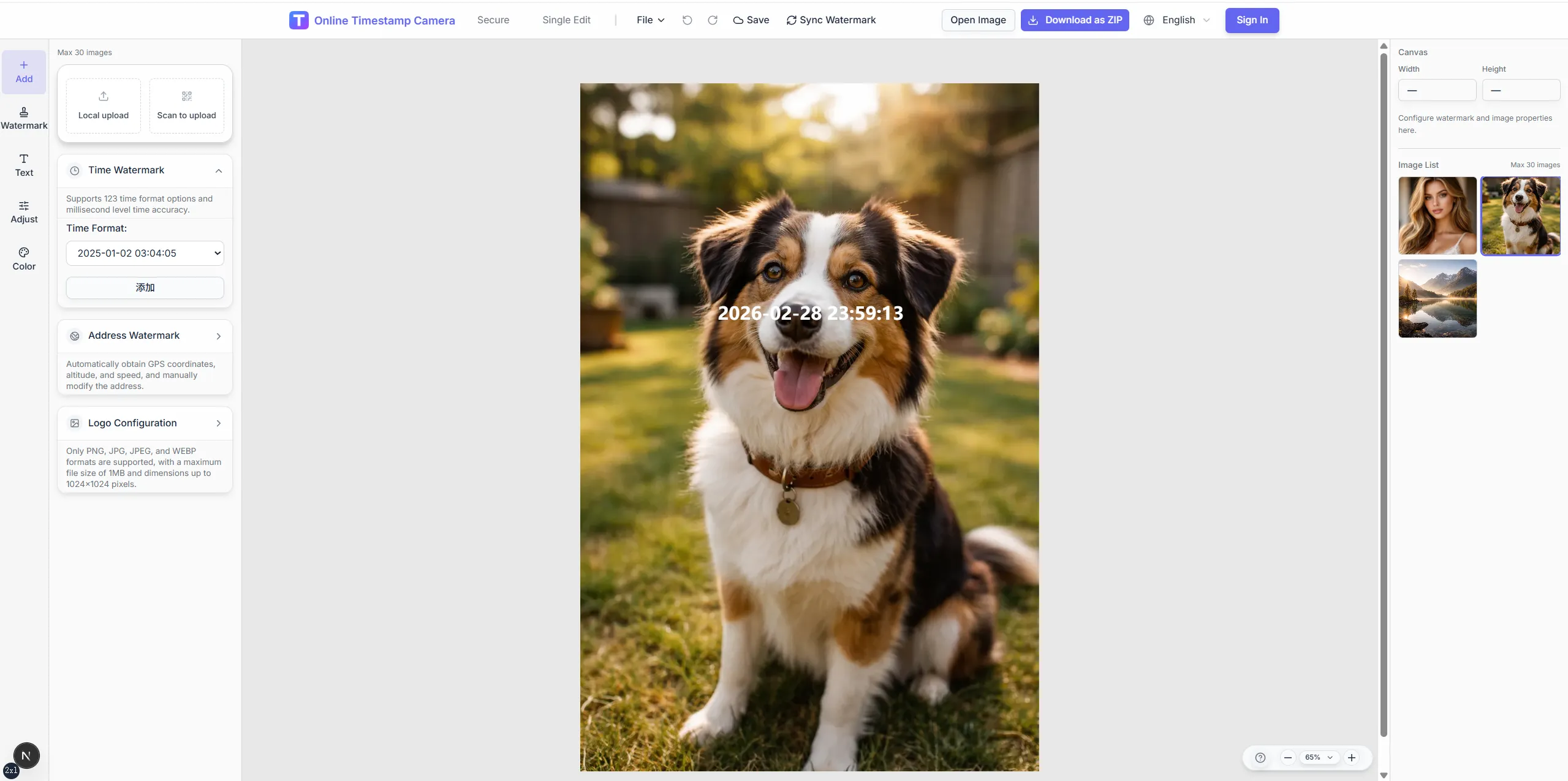
Type or paste LIMS sample codes into custom overlay lines.
Free trial · Add time, location, and proof overlays in your browser
Stamp sample IDs, timestamps, and capture location on lab bench and field photos so datasets stay linked to their origin story.
Boulder, CO · 40.0150°N, 105.2705°W
15:48:29
Mar 7, 2024 · Thursday
Reduce mix-ups in multi-sample workflows by embedding identifiers and times directly on research captures.
Show plate, vial, or trial codes beside each photo.
Record when an observation was imaged.
Add coordinates for ecological or geological samples.
Process microscope or gel imager exports in one pass.
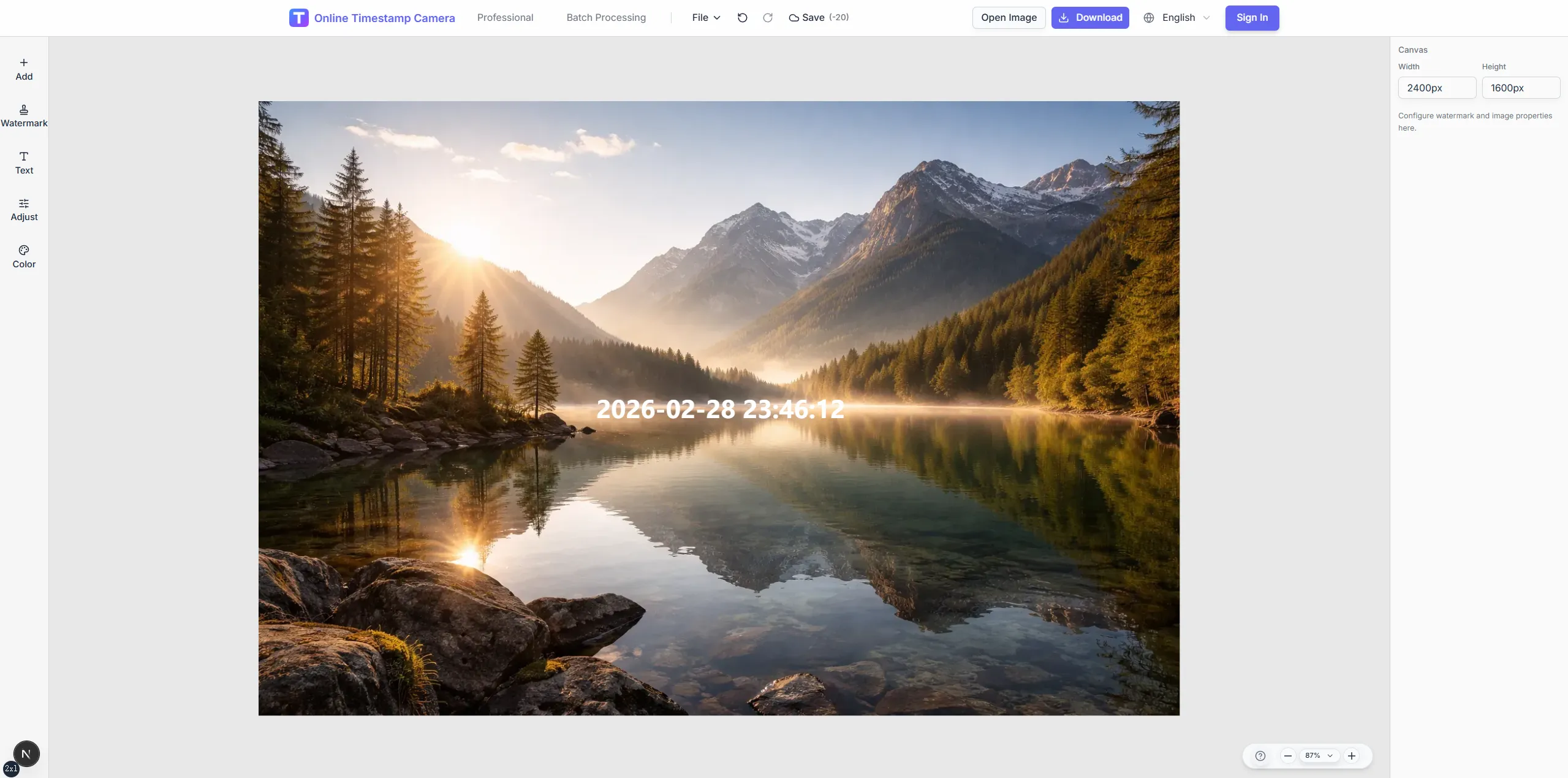
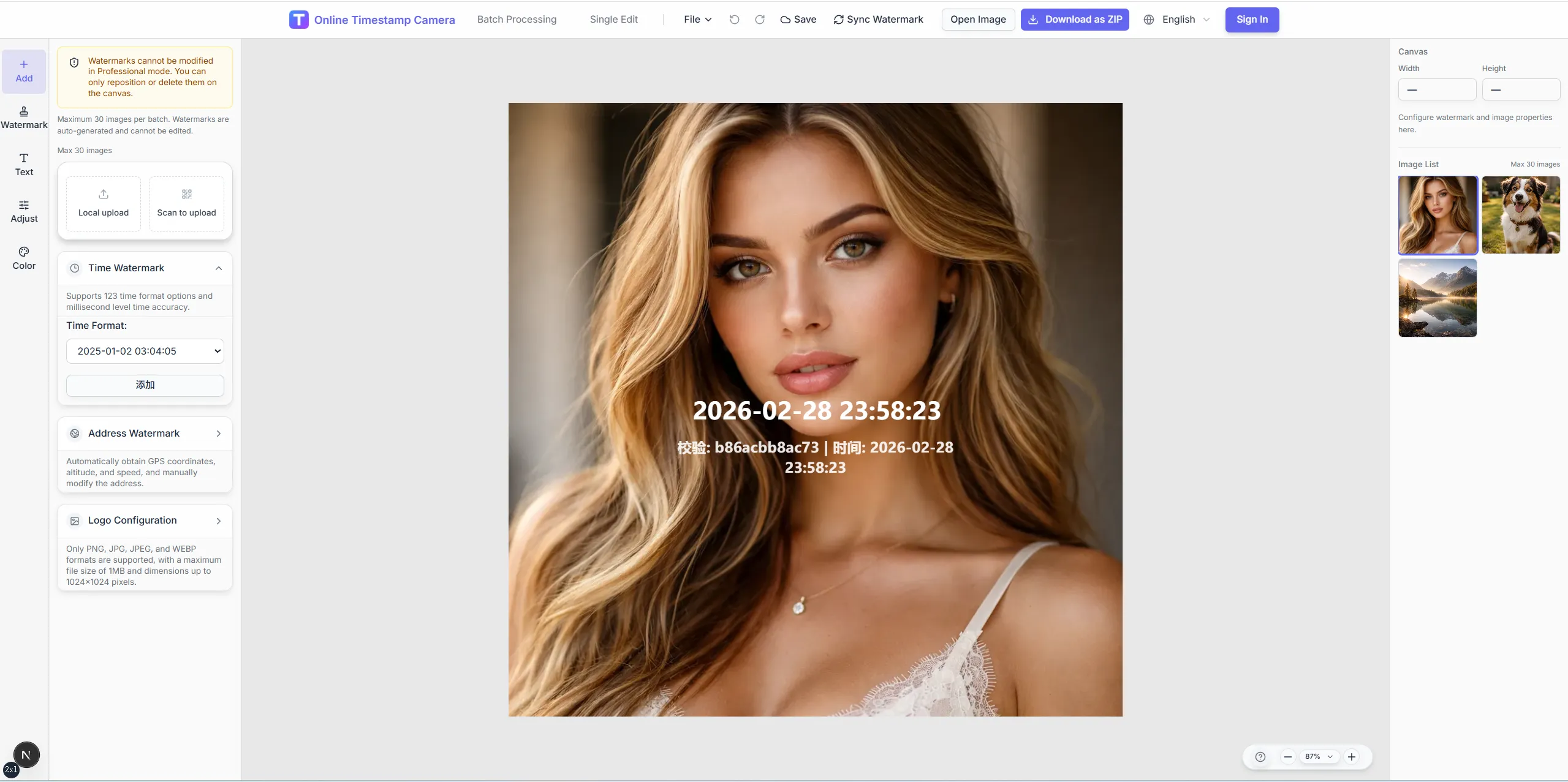
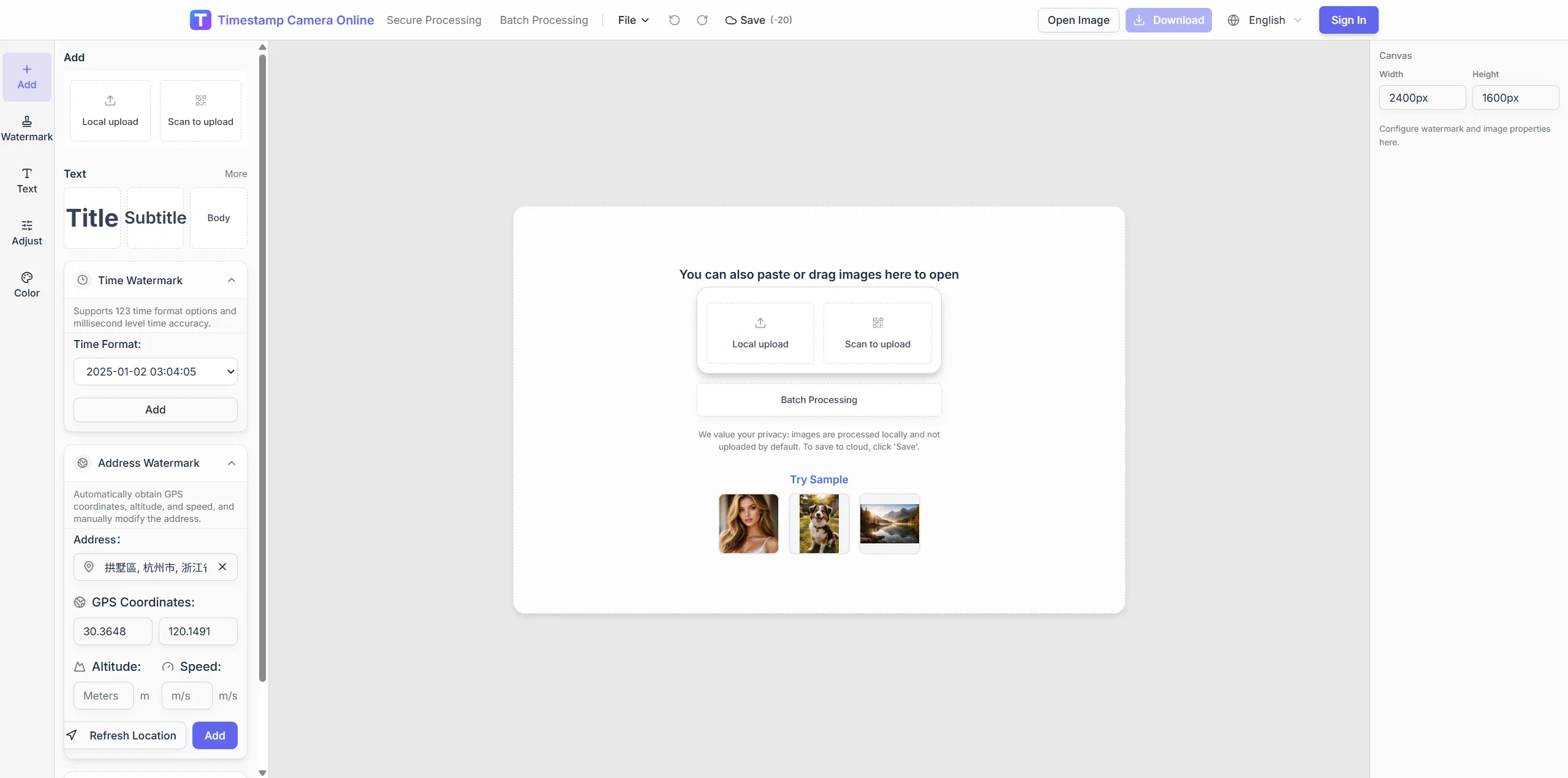
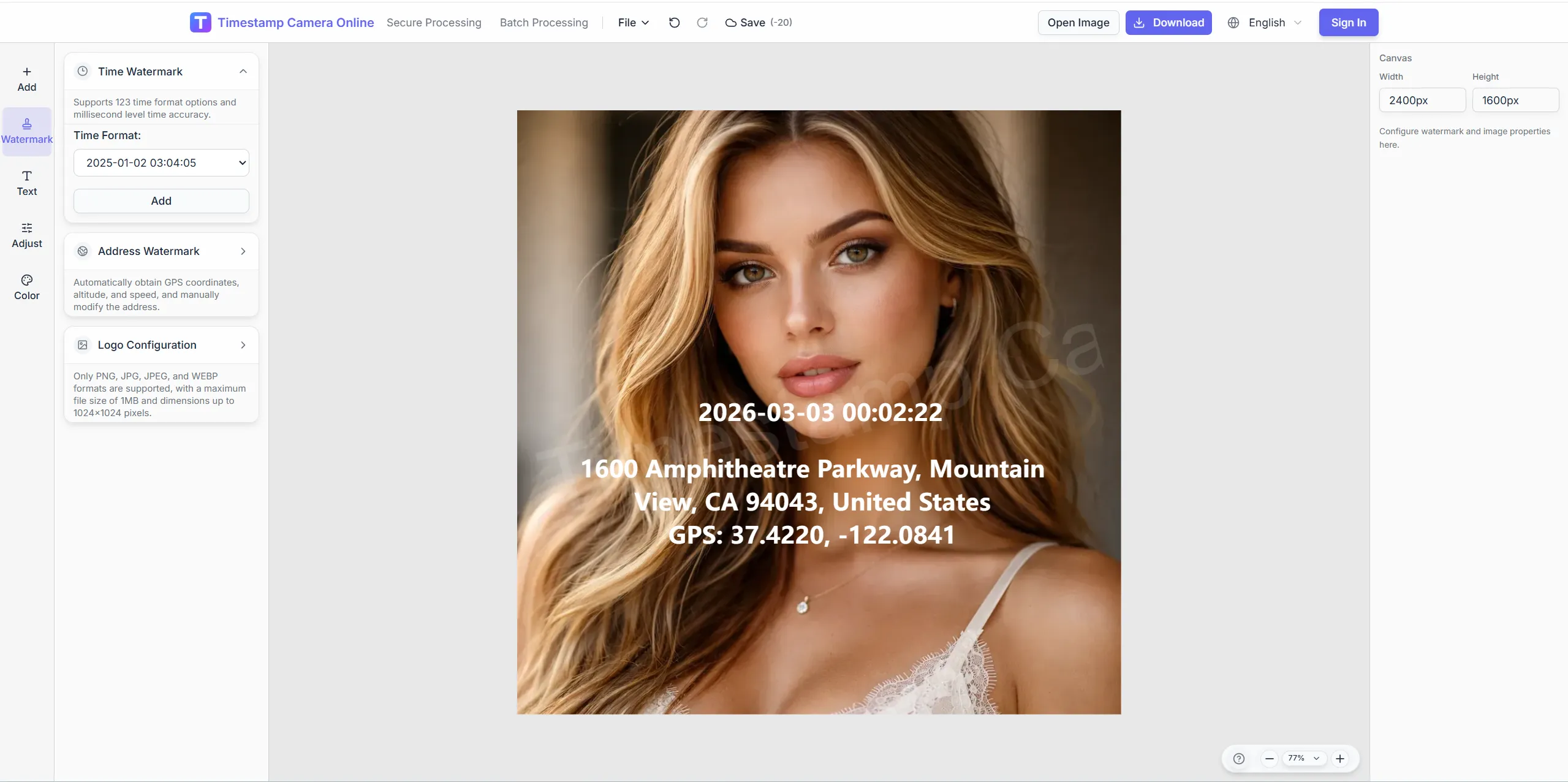
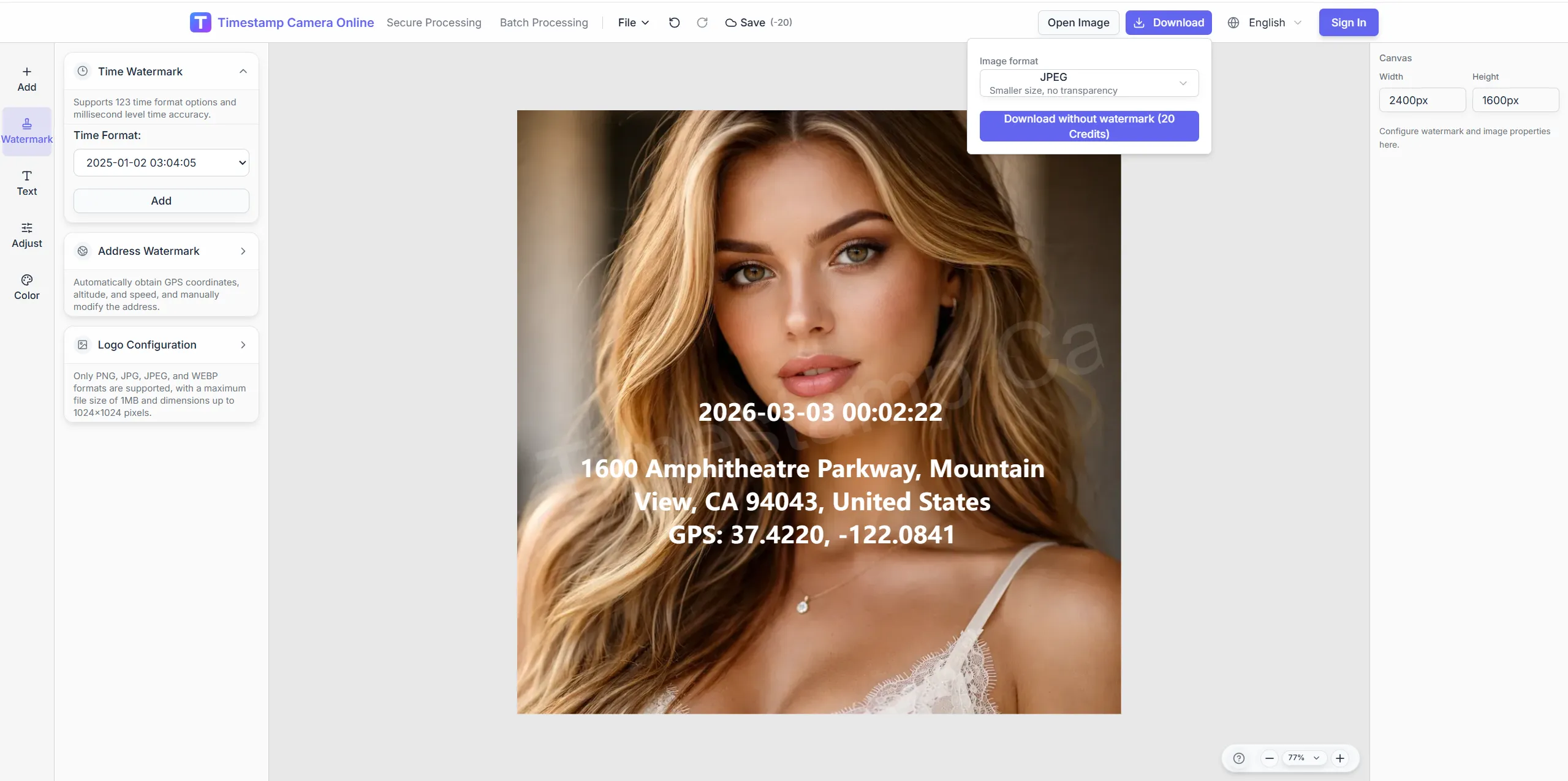
Keep sample identifiers, capture time, and optional location tied to the image before it enters the dataset.
Tighten gel lanes, balance bench lighting, and redact patient-coded labels before lab images enter notebooks or audits.
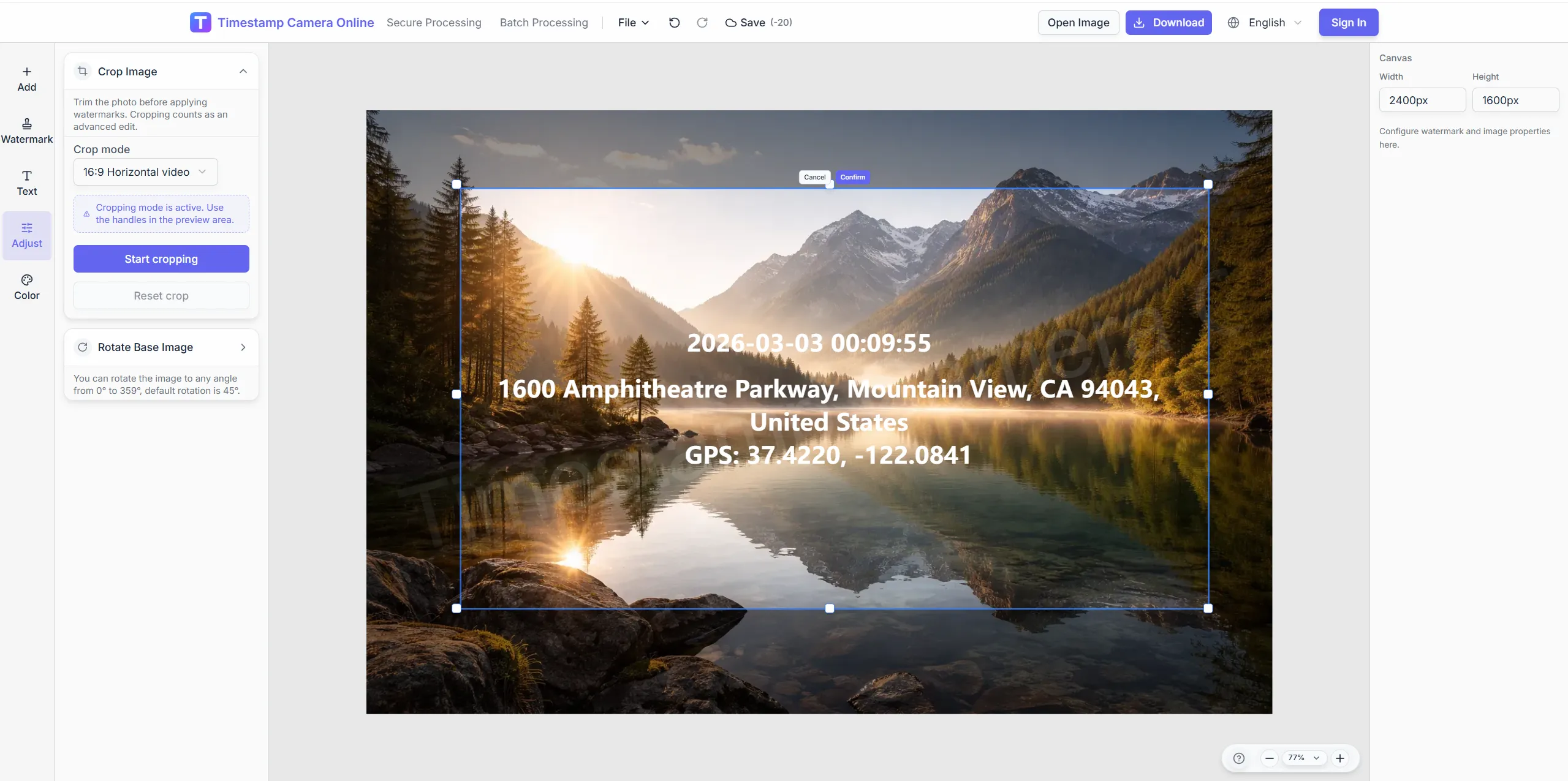
Focus overlays on relevant bands without clutter.
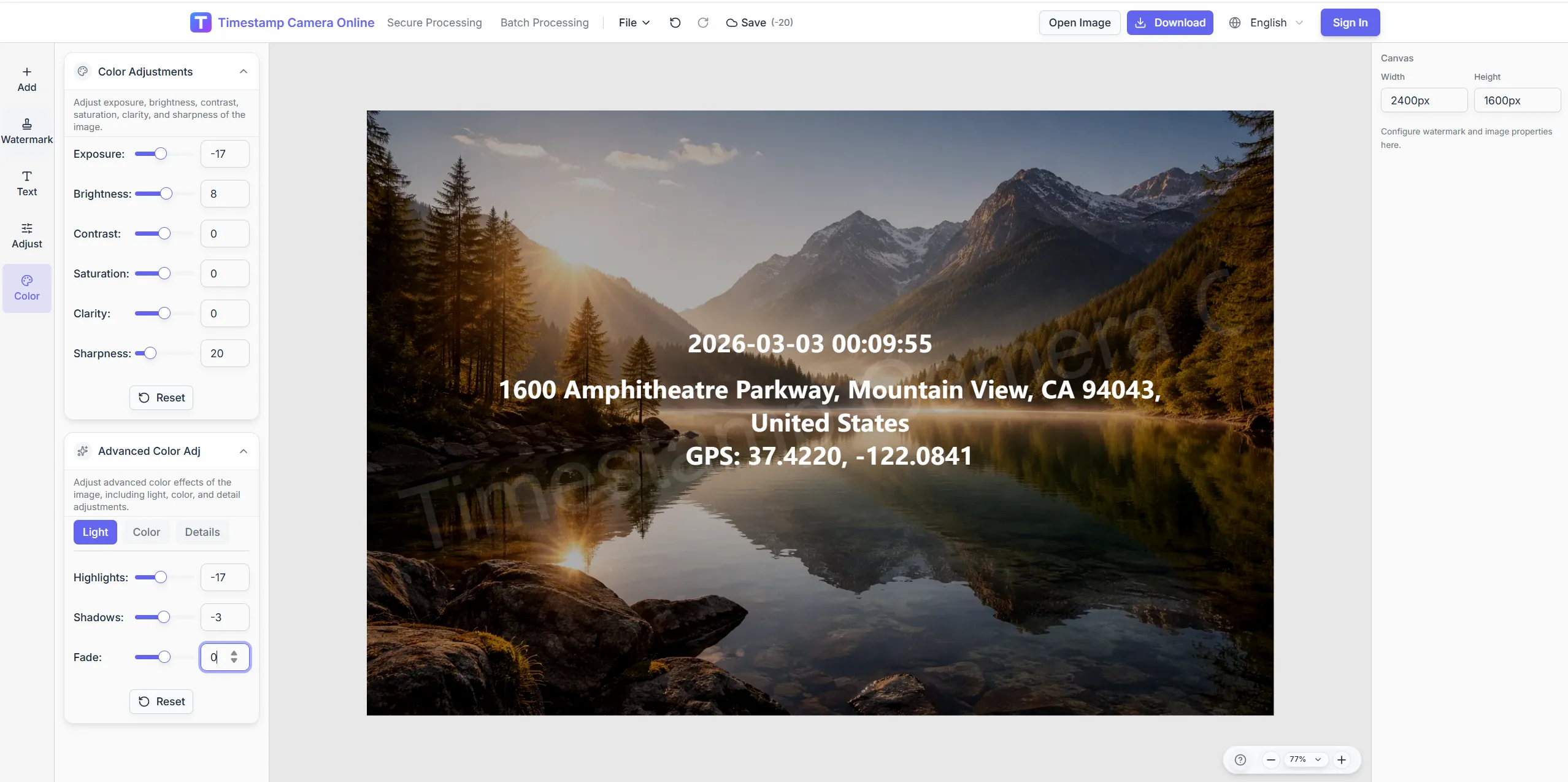
Tune contrast before adding ID text.
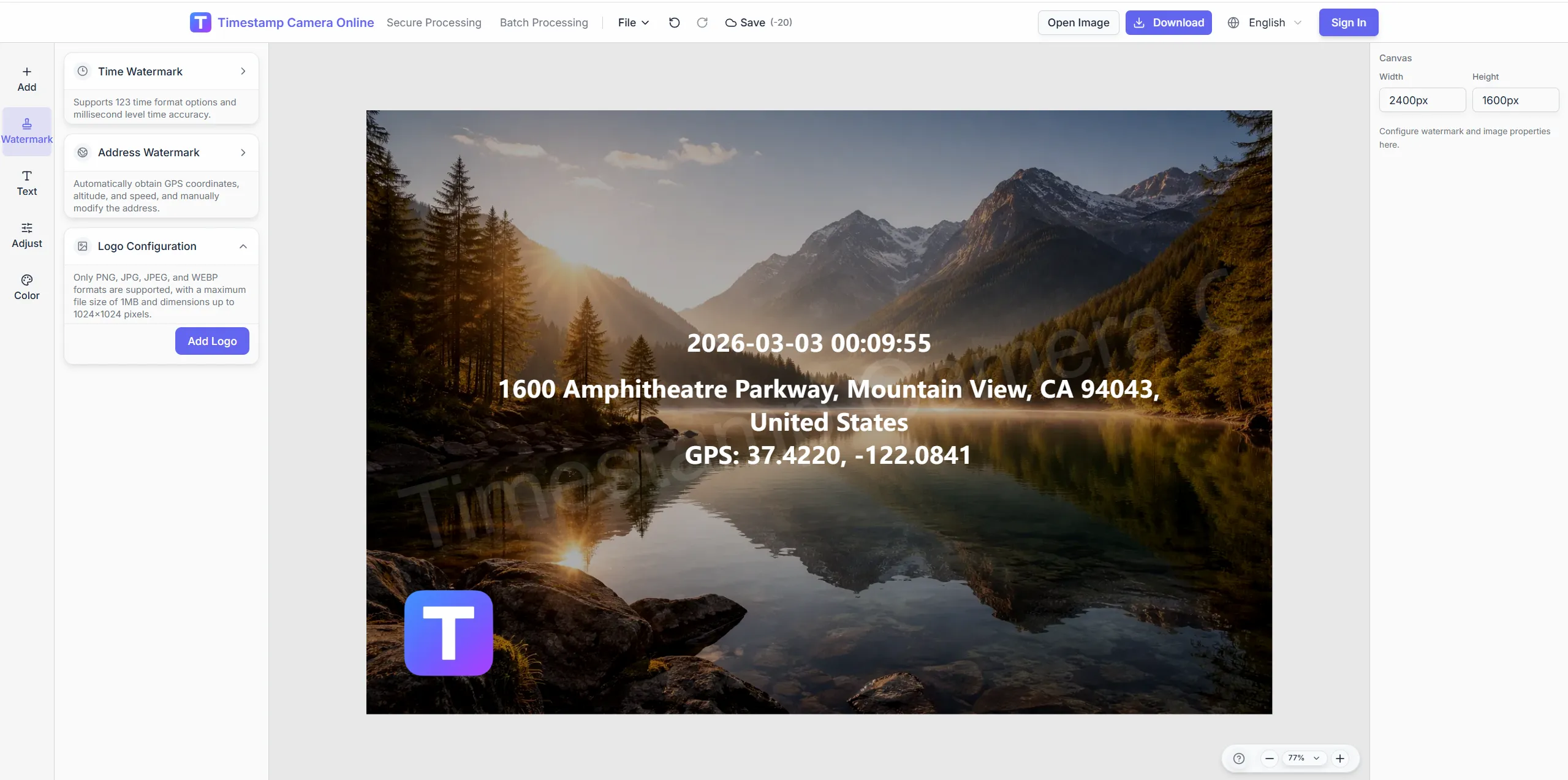
Add lab branding on publication-bound images.
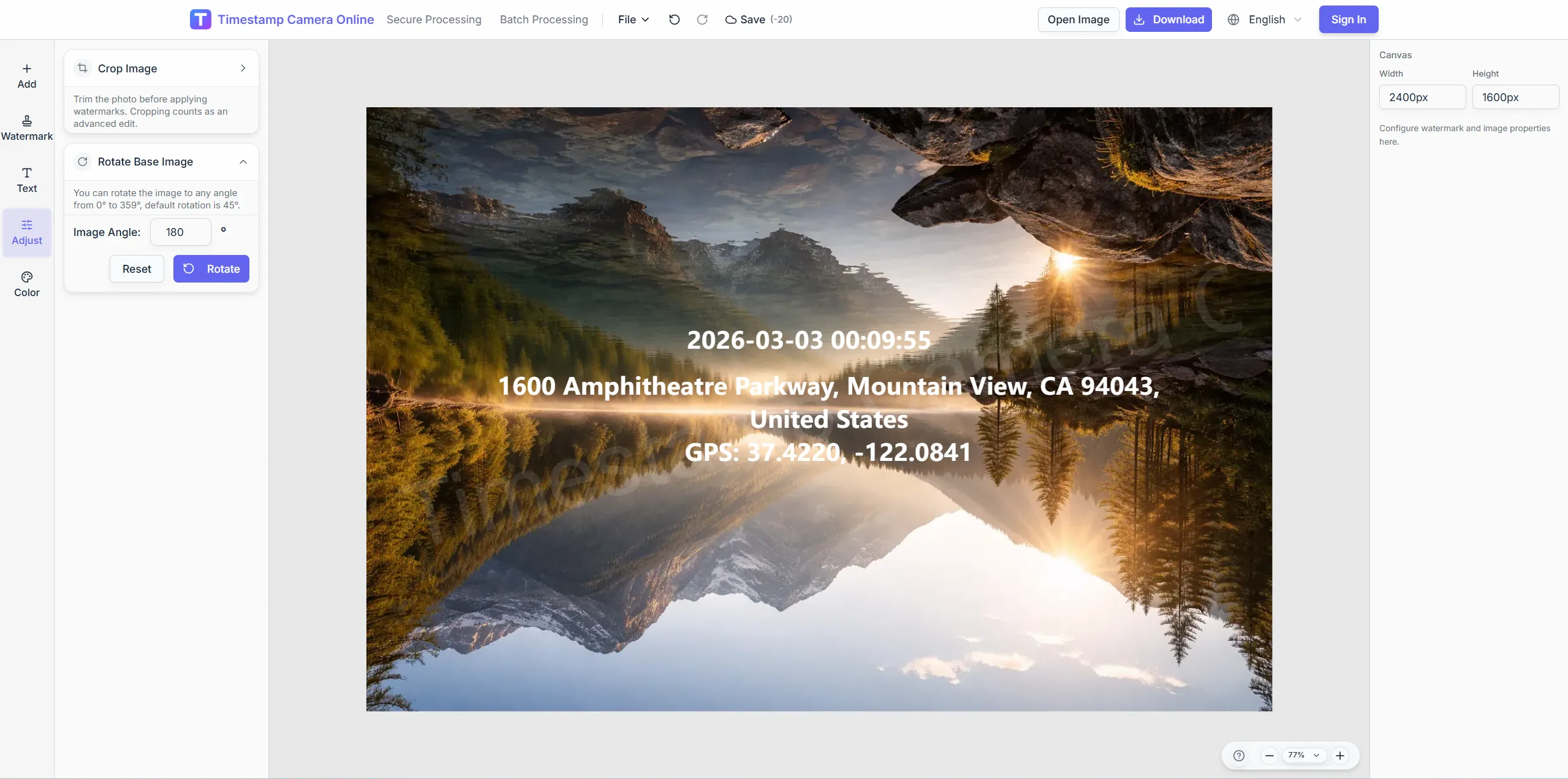
Redact identifiers on clinical research shots.
Burn sample ID, observation time, and GPS into each frame for ELN.
Import JPG, PNG, or HEIC.
Configure layers for this scenario.
Confirm reviewers can read at a glance.
Download or refine in the editor.
Research image records often need audit trails, verified exports, observation timestamps, study phases, exam context, or instrument labels.
Keep regulated study images aligned with audit fields and review steps.
View scenario
Add proof marks when research images need stronger provenance.
View scenario
Show observation time directly on field or lab images.
View scenario
Track study phases and milestones with comparable photo records.
View scenario
Document rooms, sessions, or supervision when research overlaps with education review.
View scenario
Connect instrument photos to asset IDs, QR codes, and condition notes.
View scenario
Burn sample ID, observation time, and GPS into each frame for ELN.
Local browser editing—originals not uploaded.
Visible layers beat EXIF-only for non-technical reviewers.
Templates and batch watermark suit recurring field work.
Not blockchain proof; social shares may lack GPS.
Lab and field researchers share how sample IDs and timestamps on images reduce mix-ups during review.
Boston lab ELN imports now include gel photos with sample IDs burned into each lane frame. Reviewers stopped chasing captions in separate spreadsheets during publication checks. Batch instrument uploads finish before morning standup most days.
Dr. Alan Frost · Lab director, Boston MA
Field ecology teams in Oregon geotag quadrat photos identically every summer season. PI review cycles shortened because provenance is visible on the image itself. Graduate students make fewer sample mix-ups during multi-plot weeks.
Dr. Leila Omar · Field PI, Eugene OR
Postdoc workflows in San Diego embed run IDs and capture times on microscope exports for external review. Grant auditors asked for less supplemental documentation last cycle. Clinical redaction masks patient-coded labels on shared samples.
Dr. Kenji Sato · Postdoc researcher, San Diego CA
Pick upstream/downstream links for this scenario.
Questions about sample IDs, lab-system code fields, batch instrument uploads, and PHI redaction for regulated research photos.
Type or paste LIMS sample codes into custom overlay lines.
Use redaction and standardized IDs per your protocol; consult compliance for PHI rules.
Yes. Apply one ID layout across many instrument exports.
Combine with crop tools; place text clear of measurement overlays.
Research emphasizes sample ID and repeatability; compliance emphasizes audit seals.
Use filenames with sample ID or manual ELN import.
Stack coordinate lines matching notebook latitude.
Adjust tone before placing ID lines.
Use anonymized codes instead of real sample IDs.
Fixed corner for time, ID, and location is enough.
Upload a capture and embed sample provenance.